Slow Rail Journeys Through Mountain Landscapes
Mountain railways change the meaning of progress. A curve, a tunnel and the sudden opening of a valley can make a modest distance feel like a journey into another world.
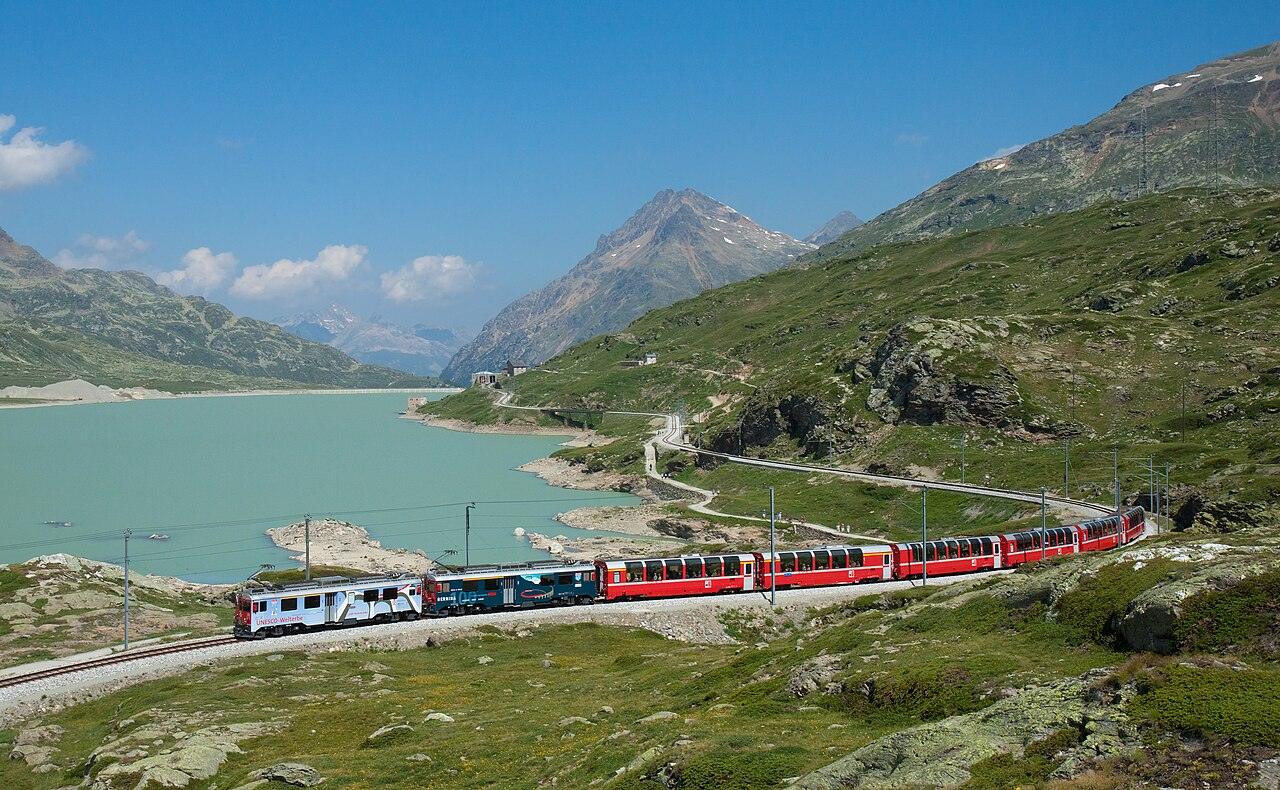
Photo: Kabelleger / David Gubler (http://www.bahnbilder.ch) / CC BY-SA 3.0 / Wikimedia Commons
From a train, a mountain landscape reveals itself in pieces. There is a wall of rock close to the window, then darkness, then an impossible-looking amount of sky. You cannot control the sequence or ask it to hold still. That is part of the attraction.
Slow rail does not always mean a heritage service or a train built mainly for sightseeing. An ordinary regional service can offer the same pleasure, especially if you give it a generous place in the day. The important choice is not simply which railway to ride, but how much attention and breathing space you bring to it.
Read the landscape between the landmarks
Mountains can make travellers impatient for the biggest view. Yet much of the story lies lower down: hayfields beside a village, water channelled through a narrow valley, houses clustered where a slope becomes manageable. Watching these details makes a journey richer than waiting for a single famous bridge or summit.
The Swiss rail network offers many opportunities to see those transitions, from valley routes to lines that climb towards higher ground. The Bernina route is a celebrated example, but a less famous connection may suit your wider trip just as well. Start with where you are staying and what sort of day you can comfortably manage, then investigate the railway options.
A railway map is useful for understanding connections, not for judging the effort of an excursion. A short branch line might involve a limited timetable, while an apparently longer journey may be straightforward. Check the operator's current information and leave room for the transfer itself, particularly if you need step-free access or help with luggage.
Choose the season as carefully as the route
Snow can simplify a mountain view into dark trees and pale slopes. Summer reveals paths, grazing land and a wider range of greens. Autumn may bring colour lower down while higher areas feel distinctly colder. No season is universally best, and a photograph from one month cannot tell you what your own journey will look like.
Daylight should shape your booking if scenery is the main point. Compare the expected light with your departure time, allowing for valleys that fall into shadow earlier than open country. Cloud can hide peaks even on a well-chosen day. Try to see weather as part of the landscape rather than a failure of the itinerary.
Still, flexibility has limits. Severe conditions may disrupt services, and a station stop does not guarantee a safe walk nearby. Check official service alerts and local weather advice. If you plan to leave the train at altitude, carry suitable layers and make sure the outing matches your fitness, equipment and the conditions.
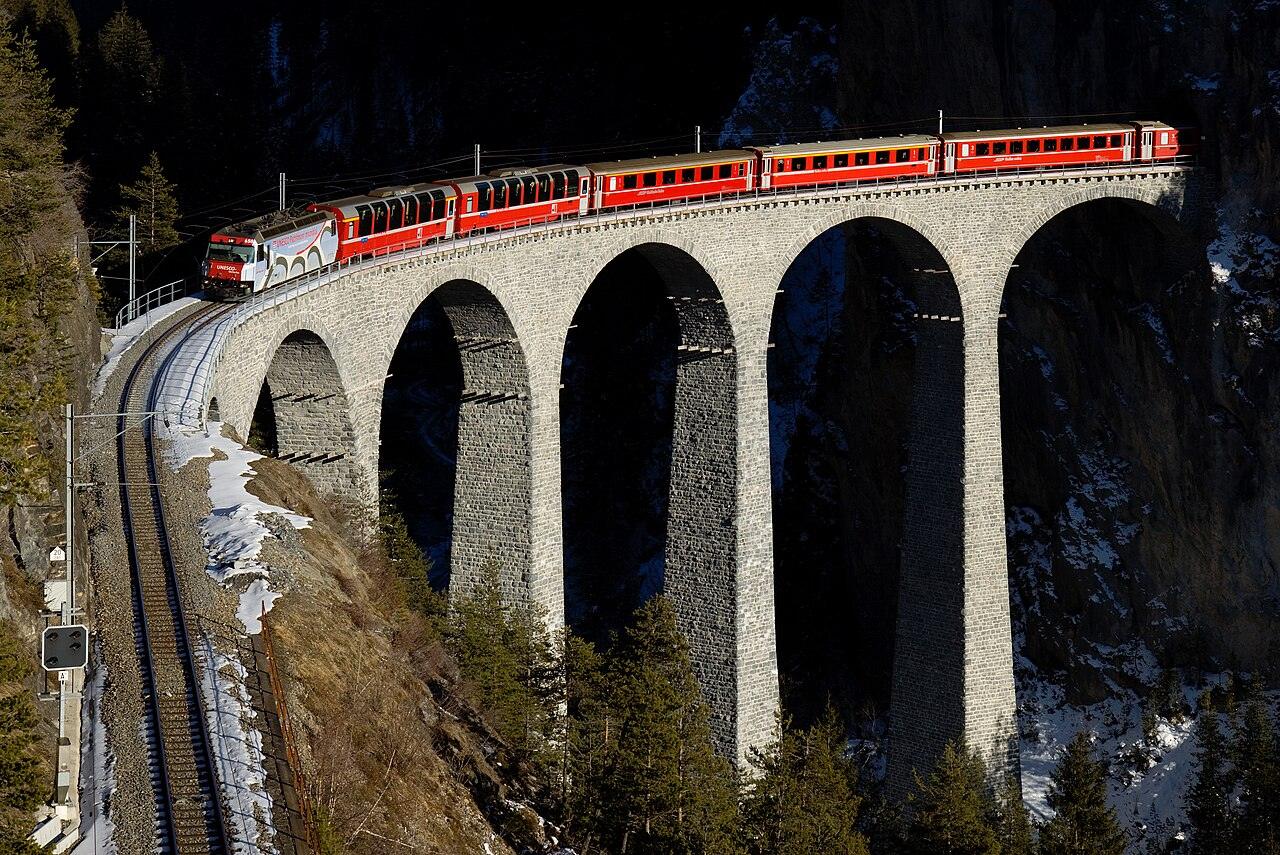
Photo: Kabelleger / David Gubler (http://www.bahnbilder.ch) / CC BY-SA 3.0 / Wikimedia Commons
Make a stop only when it adds something
Breaking a mountain journey can be wonderful: a village lunch, a signed valley walk, a quiet hour beside a station where other travellers come and go. It can also create awkward gaps or compromise a connection. Before stepping off, understand your ticket conditions and identify the next suitable departure, not merely the next train on the board.
The railway through Austria's Semmering landscape offers a different scale from a high alpine crossing, combining wooded slopes, settlements and historic railway engineering. It is a reminder that a mountain journey need not reach the most extreme terrain to feel absorbing. Choose stops according to accessible paths and local information rather than the most dramatic name on the map.
If travelling with children or someone who finds long seated journeys difficult, a planned break may be more important than continuous scenery. Find somewhere with dependable facilities and enough time to move without rushing. A spectacular platform with no shelter or accessible toilet may be a poor choice, however appealing it looks in a photograph.
Keep the carriage part of the pleasure
Pack so that the things you need are easy to reach: water, food, a warm layer and any medication. Check luggage rules and avoid filling the space around your seat with bags. Mountain railways may also be everyday transport, shared with people commuting, shopping or returning home. Keep doorways clear and voices considerate.
Photographs through glass are imperfect companions to the experience. Reflections appear, tunnels arrive at the wrong moment, and the best view may be on the opposite side. Take a few pictures if you like, then put the camera away for a stretch. You are not failing to record the journey when you simply watch it.
There is no need to fill every quiet interval with commentary. Let the landscape disappear occasionally while you read or have a conversation. Looking up again can restore a sense of surprise. The slower rhythm works partly because it allows attention to loosen and return, rather than demanding continuous amazement.
Eventually the valley widens or the train rolls back towards ordinary streets. The mountains do not need a grand farewell. Their shapes tend to stay with you anyway, appearing again when the carriage has emptied and the journey is already becoming a memory.
Travel details change. Please confirm transport, access and safety information with official sources before you go.
Keep wandering
Try another direction
Stay One More Day
Small cities, welcoming neighborhoods, islands, and places worth exploring slowly.