When the Journey Becomes the Destination
Sometimes the most satisfying part of a trip is the stretch between places. Give that time your attention and travel becomes more than a way of getting somewhere else.

Photo: Midhun Subhash / CC0 / Wikimedia Commons
Departure has its own small rituals: checking the platform, settling a bag, watching familiar streets slip away. Usually we treat these moments as the wrapping around a holiday. Yet they can contain much of what we hoped to find in the first place: a changed perspective, fewer demands and the feeling that the day might develop differently.
This does not require a grand expedition. A regional train, a ferry crossing or a bus through unfamiliar country can create the same shift. What matters is choosing a journey with enough interest and enough breathing space that you do not spend it wishing it were already over.
Choose a way of moving you can enjoy
The idea of slow travel can become another kind of pressure if it asks you to love an uncomfortable experience. A long bus journey is not automatically meaningful, and a scenic drive is not restful for somebody who finds driving stressful. Start with your own body and preferences rather than an image of how an enlightened traveller ought to move.
Perhaps you like a train because you can read without navigating. Perhaps a short ferry crossing gives you the pleasure of being outdoors while the shoreline changes shape. Perhaps walking between two nearby villages feels better than either. The right choice is the one that leaves you available to the experience, not merely proud of having endured it.
Practical comfort helps. Investigate accessibility, seating, toilets, luggage arrangements and the likelihood of motion sickness before booking. If you need assistance, use the operator's official process and check how it applies to connections. Taking care of these details is not the enemy of spontaneity. It is what makes a relaxed journey possible for more people.
Let the view have a sequence
There is a difference between arriving at a famous panorama and watching a landscape become itself. On a train out of a city, the change may begin with smaller gardens and wider streets. Later come fields, an industrial edge, a river. None of these scenes needs to be remarkable alone. Together they explain something about the place.
Try following one thread for part of the journey. Watch how buildings respond to a slope, how roads approach a river, or where cultivated land stops. This gives attention a gentle task without turning the window into homework. If you lose the thread because a conversation starts or you fall asleep, nothing has gone wrong.
You can do the same on water. A coastline seen from a ferry is not merely a succession of photo opportunities; it is a changing relationship between land, weather and distance. Stay within permitted passenger areas, dress for conditions and follow crew instructions. Enjoying the crossing should never depend on finding a risky place for a better view.
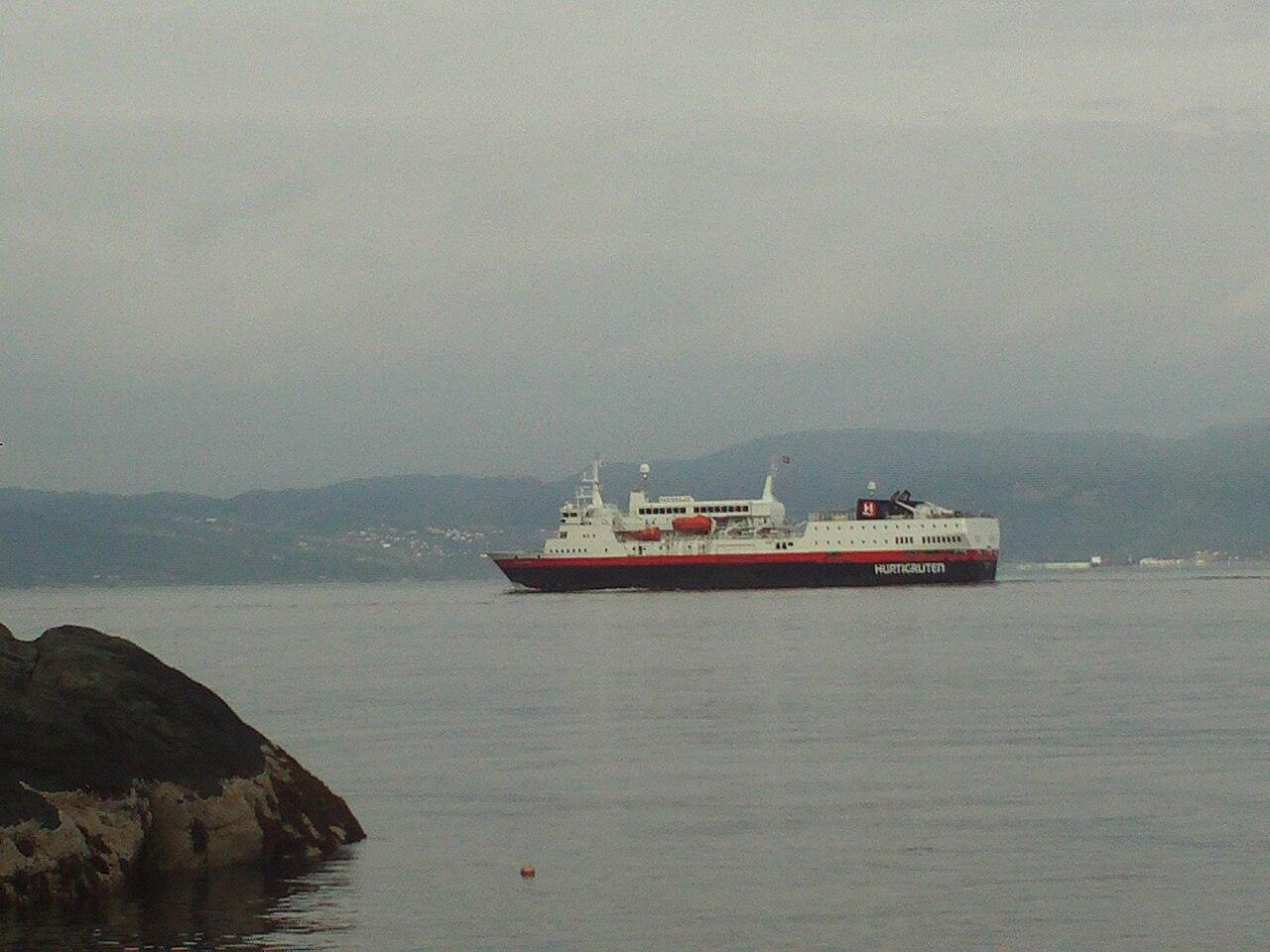
Photo: Ypsilon from Finland / CC0 / Wikimedia Commons
Leave a little of the time unused
We often carry the habits of a crowded week into a journey, filling the space with messages, downloads and plans for arrival. There is nothing wrong with entertainment, especially on a long trip. But leaving a small interval unassigned can reveal how rarely we allow ourselves to be between tasks.
Put the phone away for a stretch if you can do so without missing essential travel information. Eat something without scrolling. Look out, then look around the carriage or deck. You are sharing a temporary place with other people, each moving towards a different reason for being elsewhere.
That shared space deserves care. Use headphones, keep belongings contained and ask before opening a conversation that someone might prefer not to have. Warmth does not require performing sociability. A quiet journey can be deeply companionable when everyone has enough room to travel in their own way.
Make arrival gentle too
A journey is easier to enjoy when its ending is not a trap. Allow time to reach your accommodation, find food and understand the immediate surroundings. If an arrival depends on the last bus or a narrow check-in window, make that explicit before you leave. Confirm current transport details with official sources and save the essentials offline.
Consider whether one less change or an overnight pause would improve the whole trip. The fastest itinerary on paper can spend a great deal of your attention on making connections. A slightly slower alternative may let you settle properly into each stage. Equally, a direct journey is sometimes the kindest choice. There is no moral prize for complexity.
Once you arrive, resist the urge to prove the day was useful by immediately adding an attraction. Walk around the block, find supper or simply unpack. Travelling has already asked something of you, even if the effort felt pleasant. Let the transition count as part of the experience rather than time that must be compensated for.
This approach will not transform every delayed service into a gift. Disruption can be tiring, expensive and genuinely difficult, particularly when support is limited. You can appreciate the possibilities of travel without romanticising its failures. The aim is to notice the journey when circumstances allow, not to deny frustration when they do not.
Later, someone may ask what you did that day. You might describe the sea from a deck, a valley beyond the glass or an hour when nothing needed deciding. Those are not gaps in the story. They are the reason the journey stayed with you.
Travel details change. Please confirm transport, access and safety information with official sources before you go.
Keep wandering
Try another direction
Stay One More Day
Small cities, welcoming neighborhoods, islands, and places worth exploring slowly.