Cities to Explore Through Their Food Markets
A food market offers more than lunch: it reveals what a city grows, carries, cooks and makes time for. Visit with an appetite, a little patience and enough room in the day to follow one good ingredient beyond the stalls.

Photo: Javier Perez Montes / CC BY-SA 4.0 / Wikimedia Commons
The first useful thing to do in a market is often nothing. Stand somewhere out of the flow and let your eyes adjust to the movement. Notice which counters sell ingredients for later and which serve food to eat now. Listen for the rhythm of orders, baskets being shifted and the pauses between busy spells. You are entering a working place, not a dining room arranged around your arrival.
Markets differ enormously, even within one city. A covered hall might combine everyday shopping with destination restaurants; a neighborhood street market may operate only on particular days. Neither is automatically more worthwhile. Decide whether you want to browse produce, understand a cooking tradition or sit down for a meal, then choose a market that actually serves that purpose.
Let the city suggest a starting point
In Barcelona, a market visit can lead to questions about seafood, preserved foods and the relationship between stalls and nearby kitchens. In Palermo, street markets can open a conversation about prepared snacks and the city's layered food traditions. Istanbul offers opportunities to notice the roles of tea, bread, spices and neighborhood shopping. These are invitations to look closely, not menus every market must fulfill.
Avoid turning that starting point into a checklist of supposedly essential bites. Availability changes with season, location and the individual vendor. A stall selling a few familiar vegetables may tell you more about everyday cooking than a photogenic display aimed at visitors. Give equal attention to what people take home and what travelers eat standing up.
Make a first circuit without buying everything
Walk through once before deciding where to stop, unless the layout or crowd makes that impractical. Look for clearly displayed information, food handled appropriately and a pace that lets you ask a question without blocking a queue. Popularity can be interesting, but a long line alone does not prove quality, safety or local affection.
When something interests you, ask a specific, manageable question. Is this ready to eat? Does it contain nuts? How is this vegetable usually prepared? A few translated ingredient words can be more useful than an elaborate speech. Vendors are not obliged to provide a cooking lesson, especially during busy periods, but a clear question often makes a brief exchange easier for everyone.
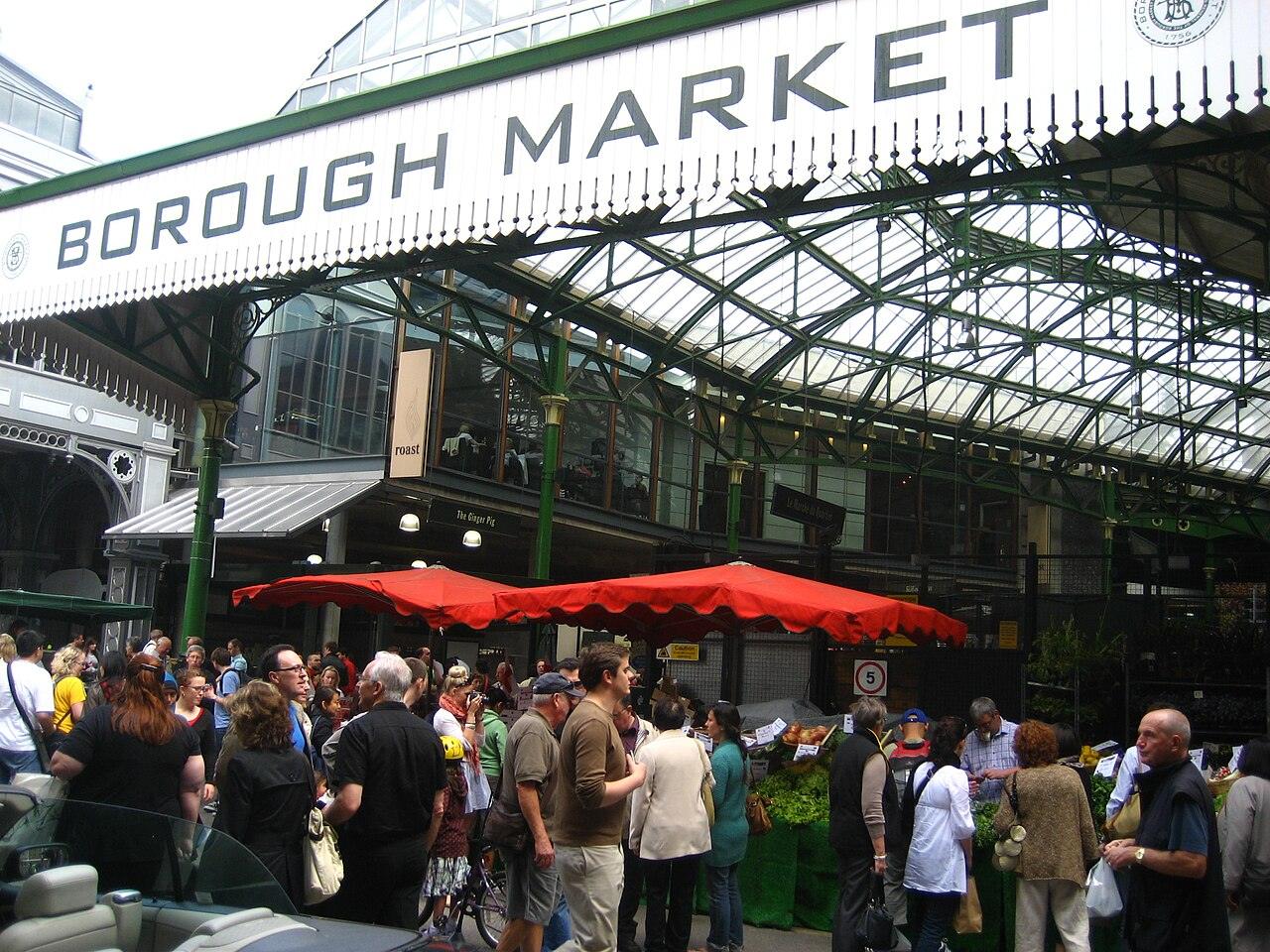
Photo: Jeremy Keith from Brighton & Hove, United Kingdom / CC BY 2.0 / Wikimedia Commons
Build a meal rather than a tasting marathon
Choose one main thing you genuinely want, then see what belongs beside it. Bread, fruit or a small prepared dish can make a meal without turning the morning into an endurance exercise. Check whether food may be eaten at a counter, in a designated seating area or elsewhere. Not every stall provides a place to sit, and nearby tables may belong to another business.
If you share food with a companion, agree on the essentials before ordering: dietary needs, appetite and whether anyone wants to keep exploring alone. Curiosity is easier when nobody feels obliged to taste something uncomfortable. Allergies require particular care. Use a translated allergy card where helpful, ask about cross-contact, and decline food when the answer is uncertain rather than treating uncertainty as part of the adventure.
Follow an ingredient into the neighborhood
A market becomes more revealing when you leave it with a question. If artichokes fill several stalls, look at nearby menus for how they are cooked. If bread appears in many forms, notice which shops specialize in it and when customers arrive. You do not need to buy more. The connection between raw ingredients and ordinary meals is the thread worth following.
Keep purchases sensible for the day ahead. Delicate fruit dislikes hours in a hot bag, and perishable foods need appropriate storage. Before taking food across a border, check the destination's official rules. Something sold openly and legally in one country may still be restricted on arrival elsewhere. A photograph or a note about an unfamiliar ingredient can be a better souvenir than something you cannot safely carry.
Eventually, choose somewhere to sit that does not obstruct trade. Eat while the meal is still good, and let the market keep moving without you. The best memory may be surprisingly modest: learning the name of a green vegetable, choosing a peach carefully, or understanding why a particular bread belongs on this table.
Questions readers ask
Should I haggle over food?
Follow local practice rather than assuming bargaining is expected. Posted prices and prepared meals are often fixed. If unsure, ask politely and accept the answer.
Can I photograph the stalls?
Ask before close photographs of vendors or their goods, and respect refusals. Stay clear of customers, queues and working surfaces, even when a display looks irresistible.
Travel details change. Please confirm transport, access and safety information with official sources before you go.
Keep wandering
Try another direction
Pick a Direction
Inspiration for travelers who know they want to go somewhere but have not chosen where.